
Firewall as a service (FWaaS) es una solución de ciberseguridad basada en la nube que brinda una protección completa de firewall de próxima generación (NGFW) sin la necesidad de un firewall físico.
Table of Contents
Firewall as a service (FWaaS) es una alternativa al costo y la complejidad de adquirir firewalls onsite tradicionales que consiste en una suscripción para proteger redes, sistemas e infraestructuras.
A diferencia de los firewalls físicos o de software, FWaaS está completamente basado en la nube. Esto permite brindar protección de firewall de próxima generación en cualquier lugar que tenga una conexión a internet.
FWaaS protege el tráfico de la red contra amenazas internas y externas, mejorando las capacidades de detección y respuesta en la red (NDR). Un FWaaS puede defender contra una gran variedad de ciberamenazas y ataques, incluyendo intentos de acceso no autorizados, estafas de phishing, gusanos y virus, ataques DDoS (distributed denial-of-service), scripting entre sitios (XSS) y de inyección de código, además de software malicioso, ransomware y malware.
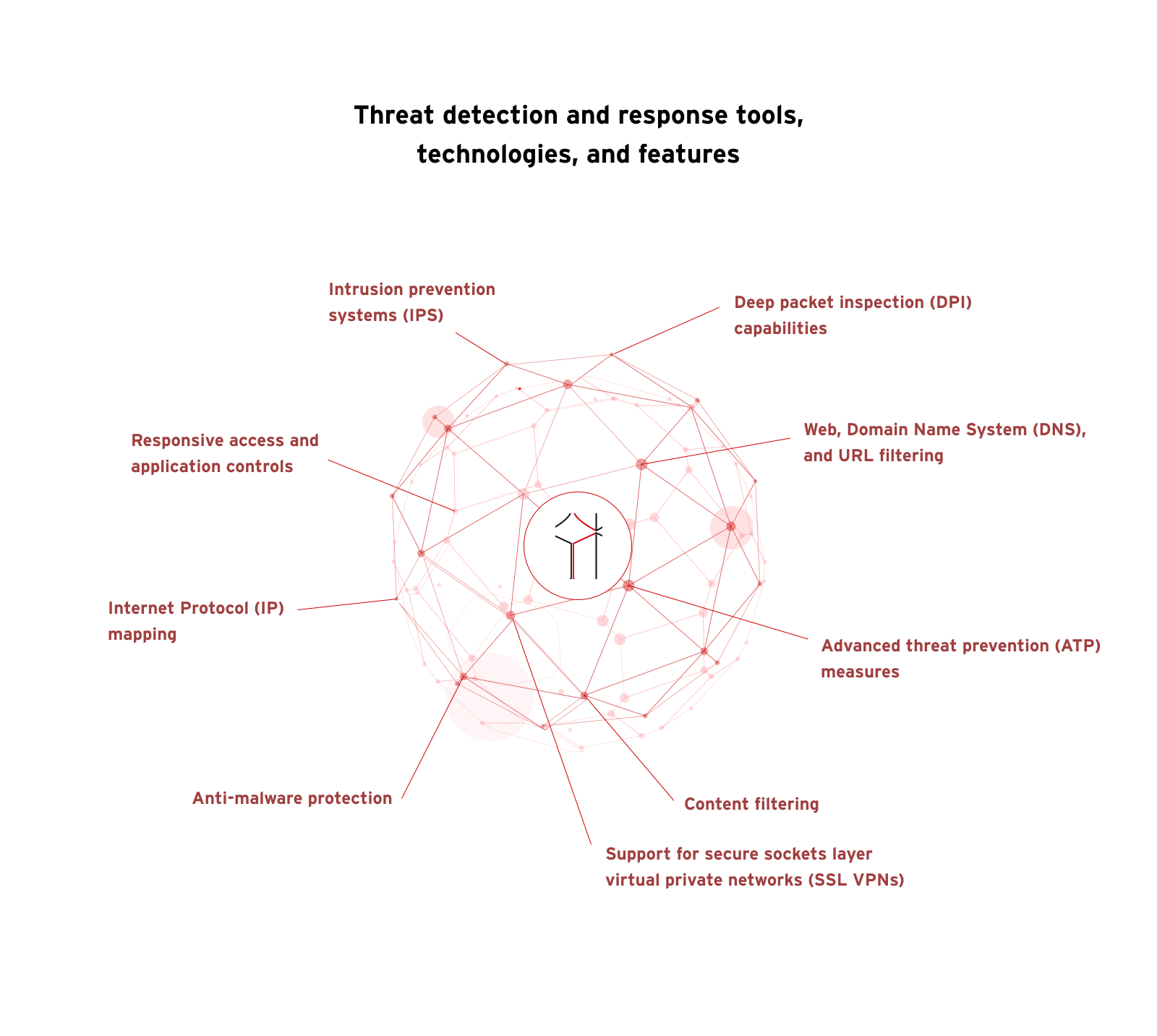
FWaaS puede desplegarse de forma completamente remota por medio de la nube o a través de una combinación de protección basada en la nube y firewalls onsite tradicionales. Para una máxima protección, la mayoría de las soluciones de FWaaS incluyen una variedad de herramientas, tecnologías y funcionalidades de detección y respuesta ante amenazas, incluyendo:
- Capacidades de Deep Packet Inspection (DPI)
- Intrusion Prevention System (IPS)
- Soporte para Secure Sockets Layer Virtual Private Networks (SSL VPNs)
- Controles responsivos de accesos y aplicaciones
- Medidas de protección contra amenazas avanzadas (ATP)
- Mapeo de IPs
- Filtro de contenidos
- Protección contra malware
- Filtrado web, de URLs y de DNS (Domain Name System)
¿Cómo funciona Firewall as a Service (FWaaS)?
Las soluciones de FWaaS son una arquitectura que permite que un solo firewall remoto proteja cualquier número de usuarios contra amenazas internas y externas, sin importar el tipo de dispositivo que estén usando o dónde se encuentren.
FWaaS analiza toda la información y el tráfico de internet que entra a la red, de forma continua y en tiempo real, para determinar qué es legítimo y qué podría tratarse de un ataque. Esto incluye examinar y evaluar los encabezados de los paquetes de datos, así como realizar inspecciones profundas (DPI) de la información de cada paquete.
Debido a que no depende de ningún hardware o software nativos, FWaaS puede integrarse sin ningún problema con las medidas existentes de ciberseguridad de una organización, incluyendo políticas e infraestructura, sin importar cuáles sean o qué sistemas o tecnologías se usen.
¿Por qué las empresas necesitan un firewall as a service (FWaaS)?
Actualmente, las organizaciones dependen de sistemas basados en la nube y, como resultado, estos activos en la nube están bajo ataque por parte de amenazas cada vez más sofisticadas. FWaaS brinda una forma flexible, económica y escalable para que las organizaciones enfrenten a estas amenazas y puedan proteger sus redes, su información propietaria y confidencial, y sus organizaciones enteras ante los actores maliciosos.
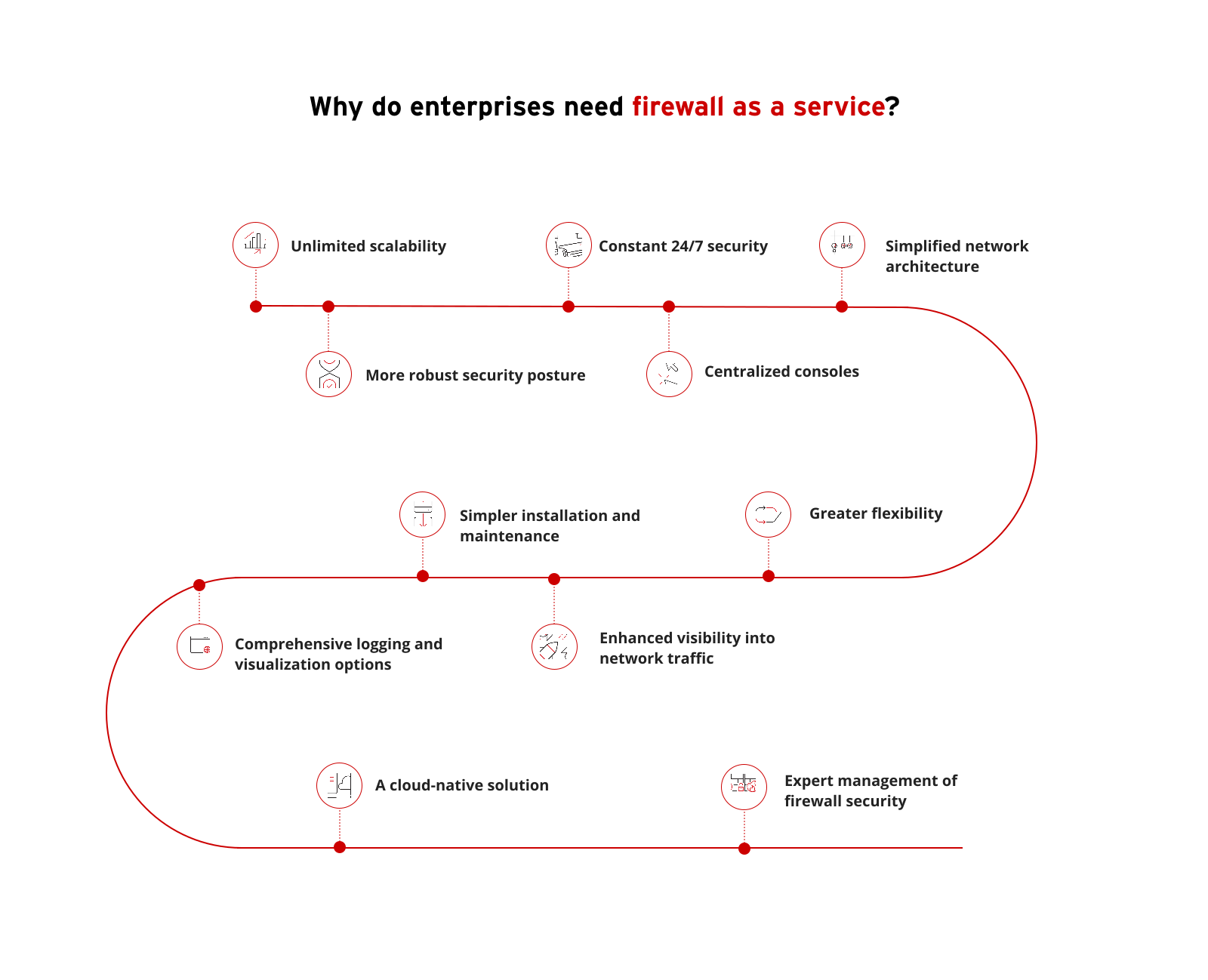
Debido a que están basadas completamente en la nube, las soluciones FWaaS brindan varias ventajas técnicas, financieras y de ciberseguridad frente a los firewalls tradicionales. Estas incluyen:
- Seguridad constante 24/7 para asegurar que el firewall siempre está activo y actualizado.
- Escalabilidad ilimitada sin la necesidad de comprar o instalar hardware adicional.
- Una solución nativa de la nube que protege los activos tanto físicos como en la nube ante cualquier tipo de ciberamenaza.
- Arquitectura de red simplificada que brinda una protección completa sin ocupar espacio físico y sin necesidad de instalar hardware específico para el firewall en cada oficina.
- Una postura de seguridad más robusta que otros firewalls tradicionales, incluyendo la capacidad de inspeccionar el tráfico de la red encriptado con SSL sin necesitar un proceso separado.
- Consolas centralizadas que unifican y optimizan los procesos de ciberseguridad al permitir que los administradores configuren o cambien los controles de los filtros, las reglas de ciberseguridad y las configuraciones en todos los dispositivos y usuarios.
- Mayor flexibilidad para cambiar, expandir o actualizar las funcionalidades y protecciones del firewall sin necesidad de cambiar algún componente físico o actualizar cualquier software.
- Una instalación y mantenimiento más sencillos sin la necesidad de que los equipos locales de seguridad tengan conocimientos, habilidades o capaciación específicas.
- Visibilidad mejorada del tráfico de la red incluyendo inspección profunda de paquetes y sistemas de prevención de intrusos para asegurar que no se está pasando por alto ninguna amenaza.
- Opciones integrales de logging y de visualización que pueden integrarse fácilmente con herramientas existentes de gestión de información y eventos de seguridad (SIEM).
- Gestión experta de la seguridad del firewall por parte de proveedores expertos para reducir la carga de trabajo de los equipos locales de seguridad.
¿Cómo puedo comenzar con firewall as a service (FWaaS)?
Para las organizaciones interesadas en la protección brindada por el FWaaS, el primer paso es usualmente trabajar con un proveedor para evaluar su infraestructura actual y sus estrategias de gestión de amenazas. El proveedor también ayudará a definir las políticas y objetivos de seguridad de la organización, recomendará un servicio o modelo de despliegue que se ajuste a las necesidades detectadas, y configurará la solución de FWaaS para monitorear y evaluar la información que entra a su red.
Una vez que está activo el firewall as a service, se puede mejorar la protección al seguir mejores prácticas como:
- Realizar auditorías regulares de seguridad y análisis de tráfico
- Brindar soporte y capacitación continuas
- Configurar el servicio para que automáticamente instale parches o actualizaciones, para que siempre brinde la protección más avanzada.
Además, la mayoría de los proveedores de FWaaS también brindan capacitación, investigaciones y soporte para ayudar a las organizaciones a realizar la transición a FWaaS, a configurar sus controles, y a integrar FWaaS con los sistemas, herramientas y controles existentes, incluyendo SDNs (software-defined networks) y SD-WANs (wide area networks).
¿Cuáles son los beneficios de usar el firewall as a service (FWaaS) de Trend Micro?
FWaaS está disponible como un componente clave de Trend Vision One™ XDR for Networks, el cual le brinda una vista de alto nivel de su red para descubrir y proteger los activos no administrados.
En lugar de conformarse con una solución puntual, XDR for Networks le brindará un conjunto variado de funcionalidades para lograr un enfoque diverso que redefinirá la frontera de la red e integrará diversas tecnologías. Esto es esencial para lograr una protección robusta, eliminar puntos ciegos y obtener insights completos de los riesgos. Con la automatización, podrá obtener una línea de defensa continua y resistente que los atacantes tendrán dificultades para evadir, saltar o deshabilitar.
Firewall as a service (FWaaS) is a subscription-based alternative to the expense and complexity of buying traditional onsite firewalls to protect networks, systems, and IT infrastructure.
Unlike traditional physical or software firewalls, FWaaS is based entirely in the cloud. This allows it to provide comprehensive next-generation firewall (NGFW) protection anywhere with an internet connection.
FWaaS safeguards network traffic from both external and internal threats, enhancing network detection and response (NDR) capabilities. A FWaaS can defend against a wide variety of cyber threats and attacks, including unauthorized access attempts, phishing scams, viruses and worms, distributed denial-of-service (DDoS) attacks, cross-site scripting (XSS) and SQL code injection attacks, and malicious software, malware, and ransomware.
FWaaS can be deployed fully remotely via the cloud or through a hybrid combination of cloud-based protection and traditional onsite firewalls. For maximum protection, most FWaaS solutions include a variety of threat detection and response tools, technologies, and features, including:
- Deep packet inspection (DPI) capabilities
- Intrusion prevention systems (IPS)
- Support for secure sockets layer virtual private networks (SSL VPNs)
- Responsive access and application controls
- Advanced threat prevention (ATP) measures
- Internet Protocol (IP) mapping
- Content filtering
- Anti-malware protection
- Web, Domain Name System (DNS), and URL filtering
How does firewall as a service (FWaaS) work?
FWaaS solutions use a multi-tenant architecture that allows a single remote firewall to protect any number of users from internal and external cyber threats regardless of the kind of device they’re using or where they’re located.
FWaaS analyzes all data and internet traffic attempting to enter the network—continuously and in real time—to determine which is legitimate and which could be an attack. This includes examining and assessing data packet headers as well as conducting deep packet inspections (DPIs) of the data inside each packet.
Because it doesn’t need to rely on any native hardware or software, FWaaS can be integrated seamlessly with an organization’s existing cybersecurity measures, policies, and infrastructure—regardless of what they are or which systems or technologies they employ.
Why do enterprises need firewall as a service (FWaaS)?
Organizations today rely heavily on cloud-based systems, and as a result, those cloud assets are under increasing attack by frequent and sophisticated cyber threats. FWaaS offers a flexible, economical, and scalable way for organizations to meet those threats head on and protect their networks, their confidential and proprietary information, and their business from bad actors.
Because they’re based entirely in the cloud, FWaaS solutions offer several technical, financial, and cybersecurity advantages over traditional firewalls. These include:
- Constant 24/7 security to ensure the firewall is always active, working, and up to date.
- Unlimited scalability without the need to purchase or install any additional hardware.
- A cloud-native solution that protects both physical and cloud assets seamlessly from any kind of cyber threat.
- Simplified network architecture that provides complete cybersecurity protection with no physical footprint and no need to install expensive firewall hardware at every office or worksite.
- More robust security posture than most traditional firewalls, including the ability to inspect SSL-encrypted network traffic without having to create a time-consuming workaround.
- Centralized consoles that unify and streamline cybersecurity processes by allowing administrators to set or change control filters, access settings, and cybersecurity rules instantly across all users and devices.
- Greater flexibility to change, expand, or update firewall features and protection without having to change any physical components or upgrade any software.
- Simpler installation and maintenance without the need for local security teams to have any specialized knowledge, skills, or training.
- Enhanced visibility into network traffic including deep packet inspection and intrusion prevention systems to make sure no threat is overlooked.
- Comprehensive logging and visualization options that can be easily integrated with existing security information and event management (SIEM) tools.
- Expert management of firewall security by experienced third-party providers to enhance reliability and reduce the workload on local IT security teams.
How do I get started with firewall as a service (FWaaS)?
For organizations that are interested in making the switch to FWaaS protection, the first step is usually to work with an FWaaS provider to assess their current IT infrastructure and threat management strategies. The provider will also help define the organization’s security policies and objectives, recommend a service or deployment model that fits their needs, and configure the FWaaS solution correctly to monitor and assess all data entering their network.
Once the firewall as a service is up and running, protection can be enhanced by following several best practices, including:
- Carrying out regular security audits and traffic analyses
- Providing ongoing support and training
- Setting the service to automatically integrate any patches, updates, or upgrades so it always provides the latest and most advanced level of protection
In addition, most providers of FWaaS also offer training, research, and support to help organizations transition to FWaaS, configure their settings and controls, and integrate FWaaS with existing systems, tools, and controls, including software-defined networks (SDNs) and wide area networks (SD-WANs).
What are the benefits of using Trend Micro’s firewall as a service (FWaaS)?
FWaaS is available as a key component of the Trend Vision One™ XDR for Networks, which offers you a bird's-eye view of your network to discover and protect unmanaged assets.
Instead of settling for a point solution, XDR for Networks will give you a broad set of capabilities that offer a multifaceted approach that redefines the network edge and integrates diverse technologies. This is essential for comprehensive risk insights, robust protection, and the elimination of blind spots. With automation and response, you gain a continuous and resilient line of defense that is difficult for attackers to evade, bypass, or disable—outperforming traditional endpoint and firewall solutions.


Jayce Chang es el Vice Presidente de Gestión de Productos, con un enfoque estratégico en Operaciones de Seguridad, XDR y SIEM/SOAR Agentic.