Technology Meets Responsibility: A New Mindset in Cybersecurity
By Christina Decker, Director Strategic Channels Europe, Trend Micro


Save to Folio
|
Christina Decker, |

Today, offering IT security is not just about selling software, applications, or tools. Modern security experts sell trust, reliability, and shared responsibility, for companies, their supply chains, and the digital society in which we all operate. Cybersecurity has evolved from a technical niche topic into a societal leadership mandate. It is essential for stability and confidence in digital infrastructure, comparable to electricity or water supply in the physical world. It strengthens the resilience of individual companies, protects critical infrastructures, and contributes significantly to society. Achieving this requires transparency and collaboration on equal terms between security providers, customers, and partners.
Regulatory frameworks such as NIS2 and DORA signal a fundamental shift. Security is not a project that can be completed and forgotten. It is an ongoing, auditable process. Providers that genuinely adopt this mindset strengthen their position over time. NIS2 requires visibility of risks across the entire supply chain, including third parties and partner relationships. DORA demands operational resilience that goes beyond tool lists, requiring structured processes, reliable testing, rapid response, recovery, and reporting. GDPR and PCI DSS add legal guardrails that require transparency, measurability, and recurring audits. The conclusion is clear: reactive “patch-and-product” approaches are no longer sufficient. Success depends on understanding, assessing, and continuously managing risks. Technology impresses only when it not only reacts to threats but also supports companies in taking responsibility and safeguarding data.
Ethical Responsibility: Empowering Instead of Overwhelming
Responsibility in security begins with mindset. It means not leaving customers alone with complex alerts, but providing context that simplifies decision-making. Which assets are at risk, which vulnerabilities are critical, what are the regulatory implications, and which measures contribute most to resilience? Small and medium-sized businesses (SMBs) need scalable support in particular. They require technology that delivers understandable risk analyses and partners who translate these analyses into clear actions, covering everything from patch and configuration hygiene to email and endpoint security, Managed Detection and Response, and SOC services.
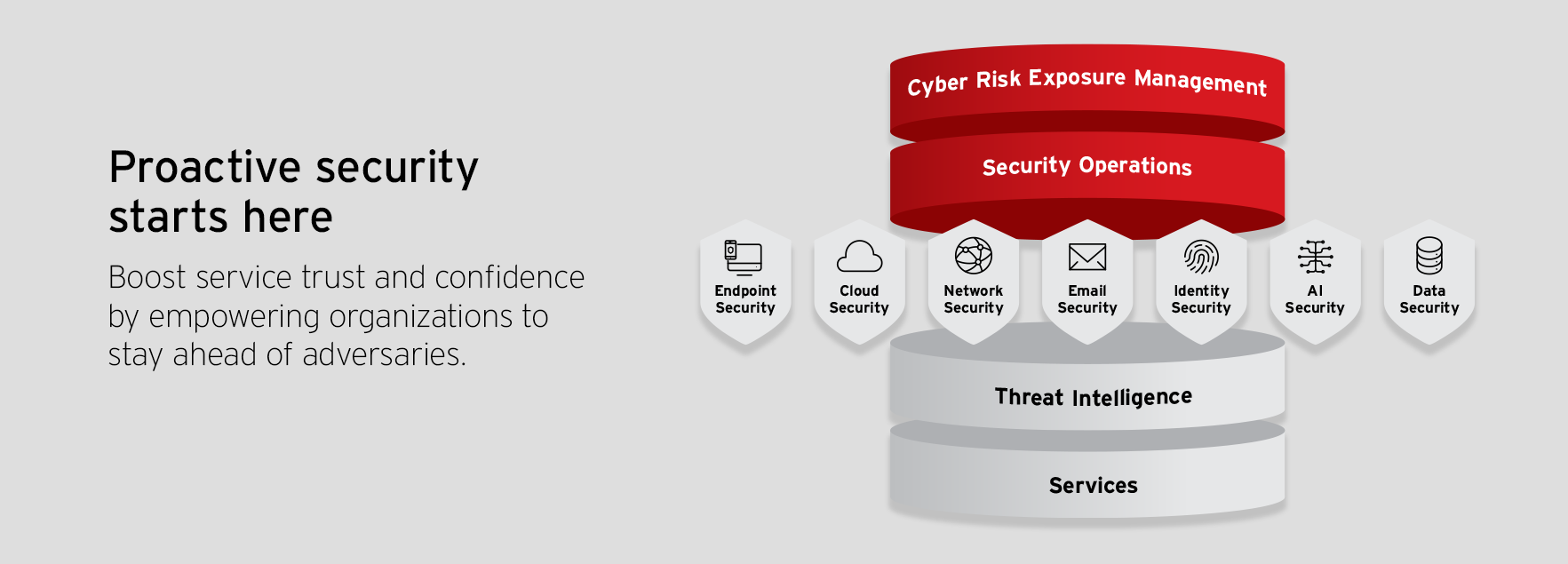
Technology becomes a lived value when it operationalizes responsibility. Our Trend Vision One for Service Providers platform is designed exactly for this. It provides end-to-end visibility across tenants while preserving confidentiality. Strict tenant separation and data ownership are core principles. The platform breaks down data silos, automatically removes duplicates and outdated information, and correlates data using AI. This reduces background noise, allowing security teams to focus on the incidents that truly matter. In addition to native sensors, Trend Vision One processes third-party telemetry from firewalls, identity systems, and cloud security tools. This increases visibility depth and protects existing investments.
Making Responsibility Measurable
An example of “technology with purpose” in practice is a typical partner use case for an entry-level MSP setup. A Managed Service Provider begins with basic security coverage and gradually expands services.
First, endpoints and servers are standardized, continuously monitored, and improved over time, with risks addressed according to priority. Next, corporate communications are secured, with suspicious emails and content detected, blocked, and quickly remediated. At the same time, the MSP provides transparency over security posture and compliance through clear reports, defined controls, and continuous monitoring, including cloud, container, and serverless environments if required. Security grows with the company’s needs and remains understandable through measurable results.
The key point is that raw data becomes responsibility. Risks are prioritized, actions documented, and compliance evidence generated, continuously and for each tenant. Security is not only reactive but also predictable and verifiable.
Conclusion: Shape Instead of React
Ultimately, security should be considered not only technically but systemically, as a continuous practice that makes risks visible, simplifies decisions, and documents progress. NIS2 and DORA end the mindset of treating security as a set of tools and embed it as a process. Responsibility means enabling customers to understand their risks comprehensively. Trend Vision One for Service Providers operationalizes this approach with continuous, dynamic risk assessment rather than isolated reactive solutions. The channel makes this scalable. Partners evolve into co-creators of confident, secure digital transformation.
Cybersecurity strengthens trust through technology that enables responsibility. When it is measurable, understandable, and collaborative, it becomes more than a tool. It becomes a mindset and a sustainable enabler of innovation and growth.