Conformità e rischi
Making Cyber Risk Measurable: Why Risk Assessment and Compliance Must Go Hand in Hand
Today, most organizations already have a broad range of modern security solutions in place, yet many still struggle with a lack of meaningful visibility. The challenge is no longer collecting more security data.


Save to Folio
Today, most organizations already have a broad range of modern security solutions in place, yet many still struggle with a lack of meaningful visibility. The challenge is no longer collecting more security data. The real challenge is translating that data into actionable insight and business-relevant risk. Boards, CFOs, and executive leadership teams don’t need highly technical analyses of individual vulnerabilities. They need clear answers: What is our actual risk exposure? Where do we need to act first? And which investments will reduce risk most effectively?
This is where the cybersecurity conversation is fundamentally shifting. Regulatory frameworks such as NIS2 are turning continuous cyber risk management into a business requirement – along with the ability to assess, prioritize, and communicate cyber risk in a transparent and measurable way.
The Problem: Too Much Data, Not Enough Clarity
Particularly in the mid-market, many companies still lack the ability to continuously assess and prioritize cyber risk in a structured way. Security tools, dashboards, and isolated data points are everywhere but they rarely provide a unified view of the organization’s actual risk posture.
That is where the real challenge begins: risks not only need to be identified, but also prioritized, contextualized, and communicated in a way that enables informed business decisions and supports long-term compliance objectives.
As a result, conversations with service providers today are becoming far less technology-centric. Instead, the focus is increasingly shifting toward questions such as:
- How can we provide customers with greater visibility into their cyber risk?
- How do we prioritize risks effectively?
- How can technical security risks be translated into business impact?
- How can compliance requirements be operationalized efficiently?
At the same time, NIS2 is adding further pressure. Companies are expected to continuously assess risk, implement appropriate mitigation measures, and document their security strategy in a transparent and auditable way.
In practice, the challenge is rarely a lack of awareness. More often, organizations struggle with limited visibility, fragmented tooling, and insufficient risk prioritization capabilities.
The Solution: Risk Assessment Requires Clarity, Not More Data
Most organizations already have access to enormous volumes of security telemetry. What matters now is the ability to turn that information into clear priorities and measurable outcomes. This is exactly why the role of modern security platforms is evolving. They are no longer focused solely on technical monitoring. Increasingly, they serve as the operational foundation for cyber risk management, governance, and compliance. TrendAI Vision One™ supports this approach with capabilities such as the Cyber Risk Index (CRI), a centralized metric designed to provide a clear, measurable view of an organization’s current risk posture.
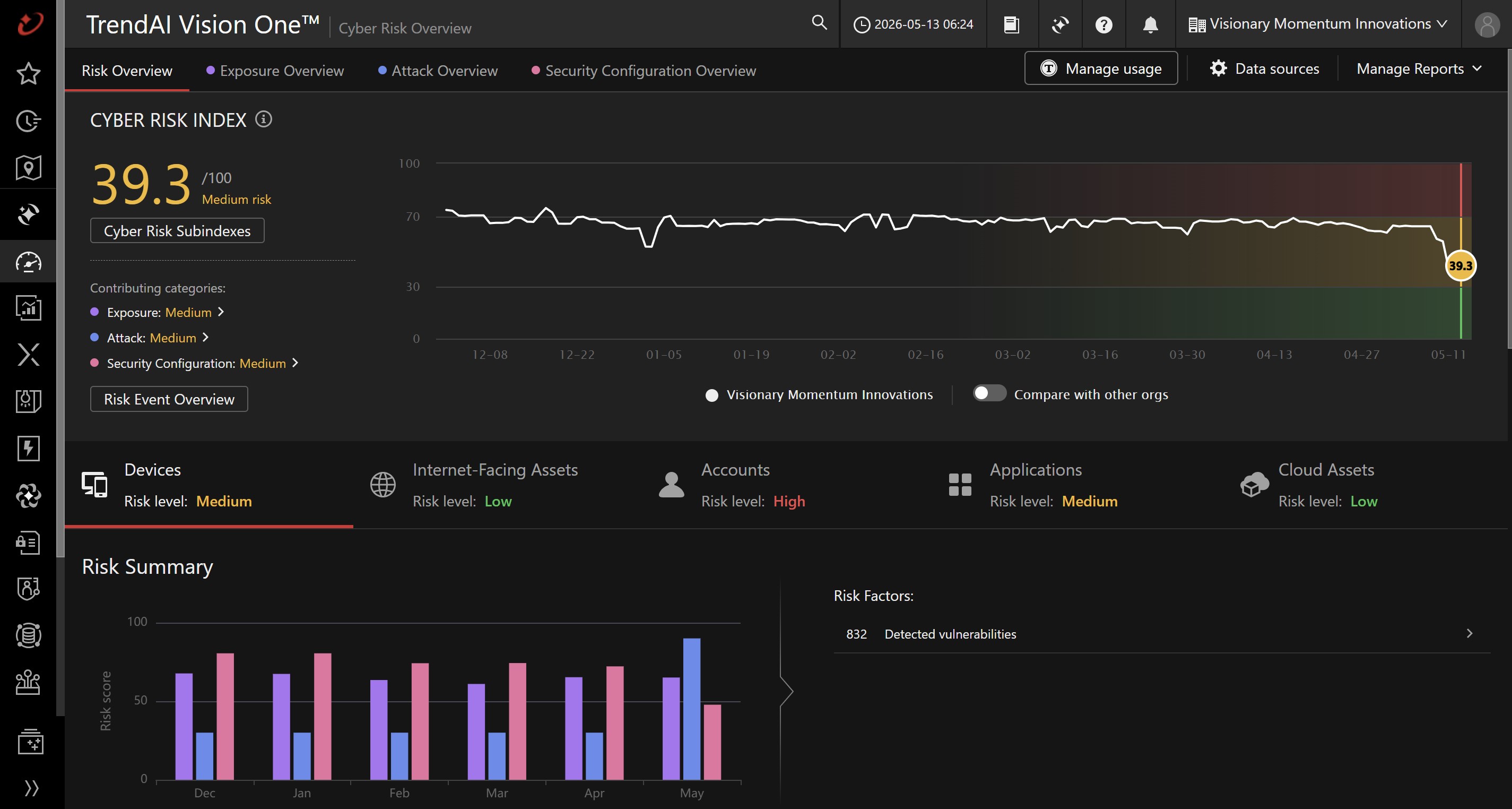
This makes it significantly easier to answer key questions such as:
- How is our cyber risk evolving?
- Where is the most urgent need for action?
- Which measures reduce risk most effectively?
- Where should budgets be prioritized for maximum impact?
The key advantage is that risks are no longer assessed purely through isolated alerts or individual vulnerabilities. Instead, organizations gain a broader, contextualized understanding of cyber risk that is equally valuable for technical teams, executive leadership, and compliance stakeholders.
From Isolated Measures to Strategic Risk Management
This approach becomes especially valuable where organizations need to actively manage and prioritize risk. TrendAI Vision One™ not only visualizes risks, but also supports organizations in defining concrete targets for risk reduction. As a result, companies gain a far more structured foundation for decision-making and investment planning.
At the center of this approach are questions such as:
- Which measures will deliver the greatest impact?
- Which risks should be addressed first?
- Where is the highest operational pressure?
- How can budgets be allocated most effectively?
This also changes the broader conversation around security investments. Instead of isolated, one-off projects, organizations move toward continuous, risk-based management of their security strategy.
For businesses, this ultimately means one thing above all: security becomes more transparent, more predictable, and more deeply integrated into strategic decision-making processes.
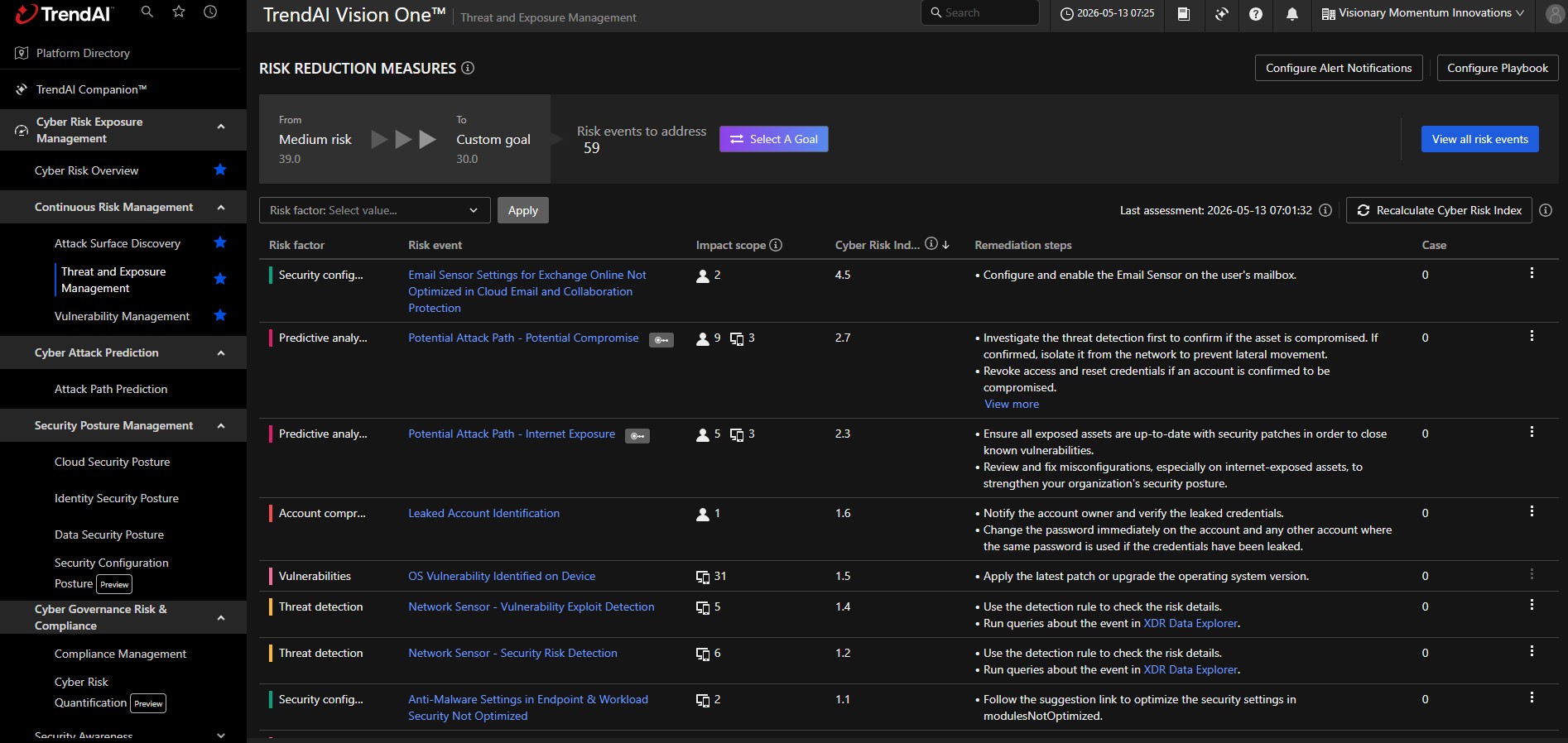
Compliance Becomes Far More Practical
This shift is particularly important in the context of NIS2. Many organizations still associate compliance primarily with documentation requirements and additional administrative effort. In reality, the objective is much broader: maintaining continuous visibility into cyber risk and reducing exposure in a structured, measurable way.
TrendAI Vision One™ addresses this by combining correlated security telemetry, AI-driven risk analytics, and Cyber Risk Exposure Management (CREM) to continuously assess and prioritize cyber risk. The result is not only greater visibility into the current security posture, but also a stronger operational foundation for governance, risk, and compliance processes. Most importantly, organizations gain the ability to combine risk assessment, prioritization, and actionable recommendations within a single framework. This allows service providers to support customers far more proactively and position compliance as part of a broader cyber risk strategy rather than a standalone obligation.
Why This Is Also Changing the Role of Channel Partners
At the same time, this shift is fundamentally changing the role of service providers and channel partners. Customers today expect far more than isolated security products or reactive incident support. They are increasingly looking for partners who can help them understand cyber risk in business terms, prioritize investments, and align security initiatives with regulatory requirements.
This includes helping customers to:
- Assess cyber risk transparently and continuously
- Prioritize remediation efforts effectively
- Plan security investments strategically
- Support evolving compliance requirements over time
As a result, the Cyber Risk Index is evolving beyond a purely technical metric. It becomes a strategic tool for communication, prioritization, and executive decision-making — creating a common language between IT teams, management, and compliance stakeholders.
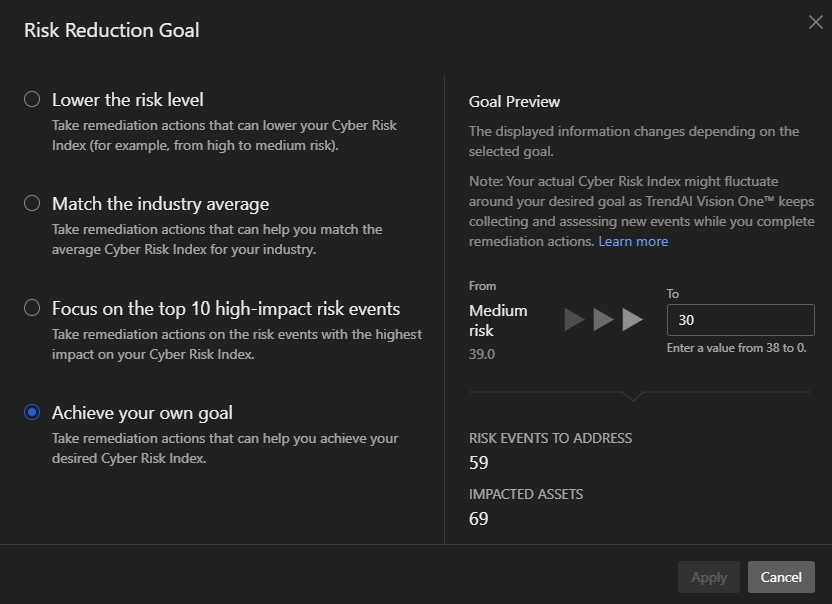
Conclusion: Transparency as a Strategic Advantage
The combination of transparency, measurable risk assessment, and strategic risk management will become increasingly important in the years ahead. Organizations that can quantify and communicate cyber risk effectively gain far more than operational visibility. They create the foundation for sustainable compliance, stronger governance, and long-term security planning.
For service providers and channel partners, this opens up new opportunities to deliver strategic value. Instead of being seen purely as technology providers, they can position themselves as trusted advisors helping customers navigate cyber risk, resilience, and compliance.